Every runner has hit this wall. Somewhere around kilometre five, your t-shirt turns from gear into an obstacle. It clings to your chest, chafes under your arms, and starts holding onto sweat like a wet towel instead of dealing with it. That's not bad luck, it's bad fabric.
|
QUICK ANSWER A good running T-shirt for men comes down to three things: a fabric designed to manage moisture, a fit that allows unrestricted movement throughout your stride, and construction that minimises rubbing from seams and fabric. Synthetic performance fabrics can be particularly useful for longer, harder, or hotter runs, while cotton may be comfortable for shorter, lower-intensity sessions but can hold more moisture as sweat increases. |
What Actually Makes a Running T-Shirt Different
So what actually separates a real running t-shirt from a regular one? It comes down to three engineering decisions, not marketing ones.
Fabric matters first: A running T-shirt should use performance fabrics such as polyester or nylon that are designed to move moisture away from the skin and support faster evaporation.”
Fit matters second: Running is repetitive motion: your arms swing, your torso rotates, your shoulders work through the same range hundreds of times per kilometre. A running tee needs to be calibrated for that movement, not for standing still in a mirror.
Construction matters third: Flatlock seams, bound necklines, and hems that stay in place under high-repetition movement are what stop a t-shirt from becoming a chafe machine by kilometre five.
At Third Society, we engineer running t-shirts around these exact three pillars, because we design for the hybrid athlete who lifts heavy in the gym and still logs real distance on the road. Miss any one of the three and the shirt breaks down somewhere between kilometre one and the finish line.
Running T-Shirt vs Cotton T-Shirt: Why Cotton Fails
Here's the comparison, feature by feature, so you can see exactly where cotton loses.
|
Feature |
Cotton T-Shirt |
Engineered Running T-Shirt |
|
Moisture handling |
Absorbs and holds sweat, up to 25 times its own weight |
Wicks sweat to the surface for fast evaporation |
|
Weight when wet |
Becomes heavy, clingy, and restrictive |
Stays light and holds its shape |
|
Chafe risk |
High: wet fabric drags against skin |
Low: smooth synthetic glides against skin |
|
Odour retention |
Traps bacteria and odour |
Resists odour build-up |
|
Best use |
Casual wear, easy winter runs |
Training, racing, high-output sessions |

One honest caveat: Cotton isn't useless. It works fine for easy recovery runs or cold-weather sessions where sweat management matters less. It falls apart specifically when output is high and humidity is high, which, for most of India, is most of the year. Outside that window, cotton works just fine, no need to overthink a recovery jog.
The Fabric Science: What to Look For
Beyond the three pillars, a few specific numbers separate a genuinely engineered running tee from something wearing the label loosely.
Fabric blend matters most: Look for polyester or nylon blends with elastane when you want additional stretch and recovery. The exact blend varies by garment, while the fabric construction determines how the material stretches and recovers during movement.
Knit construction is next: Micro-vent knits or engineered ventilation zones create actual airflow across the fabric, rather than relying on the fabric being thin enough to feel breezy.\
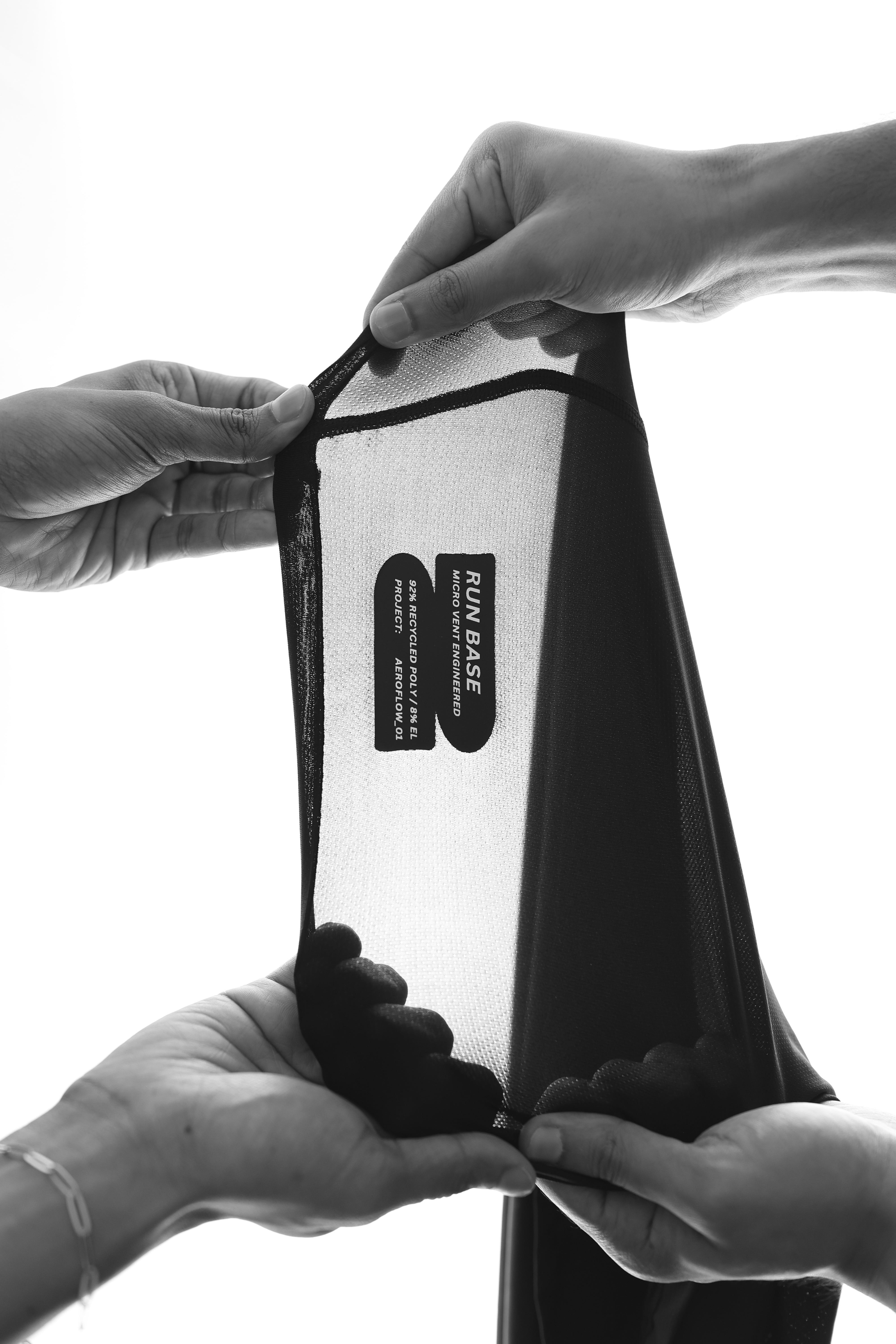
Weight is the last piece, and it's the one people get wrong most often. The ideal fabric weight depends on the conditions and type of run. Lightweight fabrics can work well in hot weather, while slightly more substantial fabrics may provide more structure in cooler conditions or longer sessions.
The Run Base tee at Third Society uses a 92 percent recycled polyester and 8 percent elastane blend with a micro-vent knit, built specifically for Indian heat and high-output training. If you want the deeper mechanics behind why the stretch percentage actually matters, check out the science of 4-way stretch fabric.
How a Running T-Shirt Should Fit
Fit is where most guys either get it right by accident or wrong without realising why.
The shoulder seam should sit right at the edge of your shoulder. If it's drooping down your arm, the shirt is too big and will bunch up under a running vest or backpack strap.
The hem should land at or just below your hip. Anything shorter starts riding up mid-run, and you'll spend kilometre three tugging it back down instead of focusing on your pace.
Tight versus loose depends on the session. A closer-fitting shirt can reduce excess fabric movement during speed work or tempo runs, while a more relaxed fit may feel more comfortable for easy or long-distance running.
For a deeper breakdown built around Indian conditions specifically, how to choose the right running t-shirt for Indian heat covers exactly how humidity and temperature should change your fabric choice.
The Third Society Run Base Tee
The Third Society Run Base Performance T-Shirt brings several of these considerations together in one running-focused design.

It comes in iron blue, a colourway designed to hide sweat marks without looking like standard black activewear. The micro-vent knit handles airflow, the 4-way stretch moves with your stride instead of against it, and the fit runs true to size, so you don't need to size up or down to compensate for a pattern that wasn't built for movement. It's built for the same hybrid athlete this entire guide has been talking about: someone who trains hard and doesn't want to think about their shirt while doing it.
If you want to compare other options, browse the men's T-shirts. Or, if you're looking for the specific style discussed above, see the Run Base Performance T-Shirt White.
FAQs
Which t-shirt is best for running?
The best running t-shirt is built from engineered synthetics like recycled polyester or nylon, with 4-way stretch and genuine moisture-wicking properties that pull sweat away from your skin instead of letting it soak in. Avoid cotton for anything beyond an easy, low-output run: it absorbs sweat and turns heavy fast.
What is the best running shirt for men?
It depends on the run. Hot weather calls for lightweight, breathable synthetic fabric with plenty of ventilation. Long distance calls for something mid-weight that holds its shape over hours. Either way, the constant is synthetic fabric that wicks sweat to the surface instead of soaking it up like cotton does.
What are some good running t-shirts for men?
Look for recycled polyester or nylon blends with a bit of elastane worked in for genuine stretch, micro-vent knit construction for airflow, and flatlock seams that lie flat against your skin instead of rubbing during high-repetition movement. Those three specific details matter more than any brand name on the label.
What type of shirt to wear for running?
A technical running t-shirt made from synthetic fabric, never cotton. It should have genuine moisture-wicking properties, not just a marketing claim, and a fit that allows your shoulders and torso full range of motion without the fabric bunching at the shoulders, riding up at the hem, or restricting your natural stride.
What do most runners wear?
Most serious runners wear technical running tees made from synthetic blends, paired with running shorts or tights built the same way. The real lesson isn't the specific gear, it's that they test everything in training first: race day is never the time to try something new.
Is a 100% cotton shirt good for running?
No. Cotton absorbs sweat rather than moving it away from your skin, which makes the fabric heavy, clingy, and far more likely to chafe as a run goes on. For easy, low-effort sessions it's tolerable, but for real training or racing, engineered synthetics do the job cotton simply can't.
Key Takeaways
• Fabric science isn't marketing fluff. It's the actual difference between a shirt that helps your run and one that fights it.
• Cotton fails the moment output and humidity both climb, which is most runs, most of the year, in most of India.
• Fit has to be calibrated for motion, not for how a shirt looks standing still in a changing room.
Ready to feel the difference engineered fabric makes? Explore the Run Base performance tee collection and build your training rotation around gear that disappears the moment you start moving.
The Bottom Line
A good running T-shirt should stay comfortable as the run gets harder, hotter, and longer. Look for a fabric that manages moisture, a fit that moves naturally with your body, and construction that minimises rubbing and unnecessary fabric movement.
The right shirt depends on how and where you run. Consider the weather, distance, intensity, and time of day before choosing the fabric, fit, and features that work best for you.